
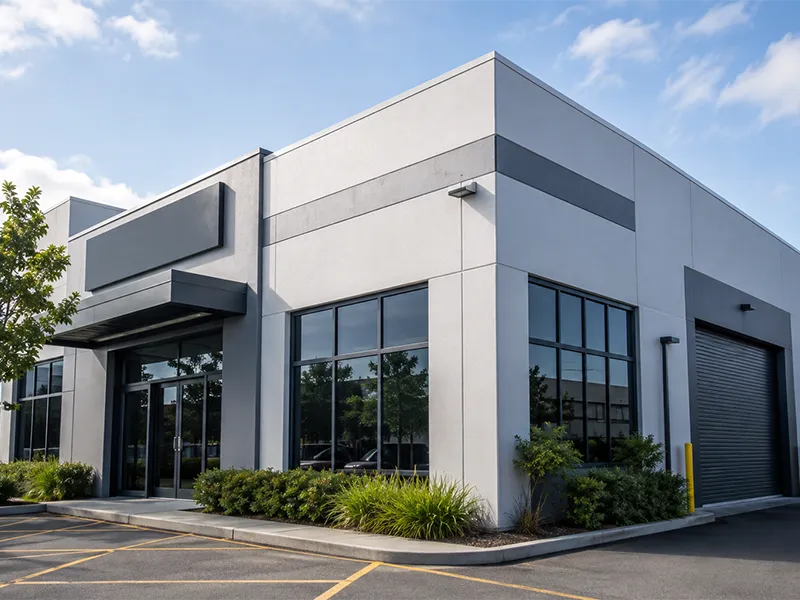
A commercial property’s exterior is doing a job every single day, whether that’s reassuring customers walking past a shopfront, giving tenants confidence in a building’s upkeep, or simply representing your business to everyone who drives past. Paintwork that’s past its best undercuts that job quietly, often well before it becomes obvious enough that everyone notices at once.
Fading, Chalking and Inconsistent Colour
Sun exposure hits commercial buildings hard, particularly larger expanses of wall or render with no shade. Fading is usually the first sign, followed by chalking, a dusty residue that rubs off when you touch the surface. If your building uses branded colours, inconsistent fading across different walls or elevations can start to look patchy rather than simply aged, which is often more noticeable to customers than uniform wear would be.
Cracking, Peeling or Bubbling
Once paint starts cracking, peeling or bubbling, it’s telling you moisture is getting in somewhere. On commercial buildings this often shows up first around window frames, parapets and anywhere water tends to pool or run. Left alone, what starts as a cosmetic issue can turn into something that affects the substrate underneath, which costs considerably more to put right than a straightforward repaint would have.
Older Buildings Need a Bit More Care
If your building was constructed before the early 1990s, there’s a reasonable chance some of the original paintwork underneath later coats contains lead. This isn’t unusual and isn’t cause for alarm, but it does change how preparation should be handled, particularly if sanding or scraping is involved. A proper assessment before work starts, and the right containment and disposal practices if lead paint is found, protects both your staff and anyone working on the job. It’s a standard part of how we approach older commercial and strata buildings, not an extra step tacked on afterwards.
Heavy Wear in High-Traffic Areas
Entryways, stairwells and communal corridors take a different kind of punishment to the rest of a building. Trolleys, deliveries, foot traffic and the occasional knock from moving stock all wear paint down faster than general weather exposure alone. If these areas are looking scuffed and tired while the rest of the building holds up reasonably well, it’s usually a sign that a targeted refresh is overdue rather than a full repaint.
Warehouses and industrial units have their own wear pattern again. Forklift traffic, loading docks and constant door use mean lower wall sections often need attention years before the upper walls or roofline do. A repaint that focuses on those high-impact zones, rather than treating the whole building as one job, is often the more cost-effective approach for industrial spaces.
What Waiting Actually Costs
Commercial coatings are built to handle more than a standard residential job, but they still have a service life, and deferred maintenance tends to compound. A wall that needs a straightforward repaint this year can need render repair and a repaint next year if left too long, particularly in exposed coastal conditions where sun, salt and moisture all work against paintwork faster than they would further inland. Dulux’s own guidance for commercial buildings points to proper preparation and the right coating system as the biggest factors in how long a commercial repaint actually lasts, which matters more once a building has already been left too long between jobs.
If You’re Part of a Strata Scheme
A lot of commercial and mixed-use buildings on the Central Coast sit under strata title, and if that’s the case, exterior walls are usually common property rather than something an individual owner or tenant can act on alone. Under NSW strata rules, the owners corporation is responsible for maintaining common property, and larger repaint jobs are generally expected to be planned for in the scheme’s 10-year capital works plan rather than handled as a surprise expense. If your building’s exterior hasn’t been budgeted for, it’s worth raising with the strata committee sooner rather than later, since jobs planned for tend to be considerably less disruptive and less expensive than ones addressed as an emergency.
Minimal Disruption to Your Business
We know a repaint can’t come at the cost of your trading hours or your tenants’ day-to-day operations. We plan commercial painting jobs around your business hours, work in stages where needed, and keep access and signage visible throughout, so customers can still find you and staff can still get in and out without disruption to how the property actually runs.
Related Reading
- How Often Should You Repaint Your Home on the Central Coast?, the same coastal wear factors apply to commercial buildings
Ready for a Straightforward Quote?
If your building is showing any of these signs, it’s worth getting an honest read on what’s actually needed before it becomes a bigger job. Give the team at ECE Paint Crew a call on 0423 526 896 or get in touch through our contact page, and we’ll talk through timing, scope and how to keep the job running smoothly around your business.